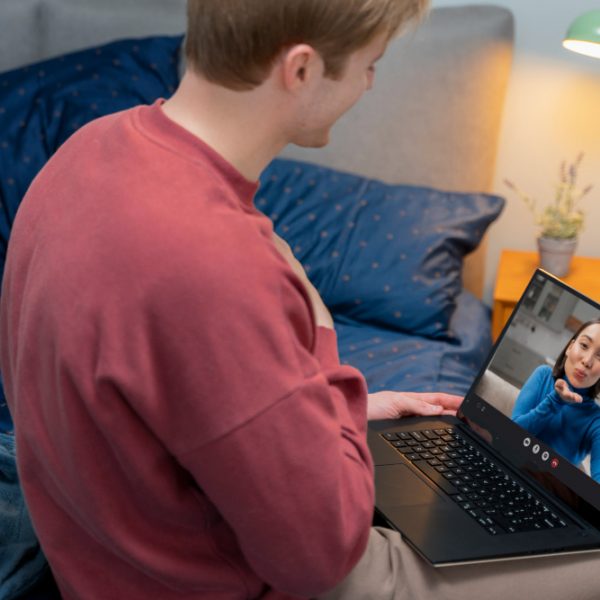
Addiction treatment can fit around your job, school, and family it doesn’t have to mean stepping away from any of them. At Compassion Recovery Centers, our online addiction treatment orange county program delivers licensed, medical-grade substance abuse rehabilitation to adolescents, young adults, and adults across Southern California. Anchored by our South Orange County clinical center at 23141 Moulton Pkwy, Suite 207, Laguna Hills, CA 92653, our telehealth infrastructure delivers addiction therapy, remote toxicology accountability, and psychiatric stabilization without geographic barriers.
A virtual intensive outpatient program (Virtual IOP) delivers comprehensive substance abuse rehabilitation through encrypted, HIPAA-compliant video platforms. Unlike automated wellness applications or informal peer forums, our outpatient addiction treatment online operates under strict clinical regulations enforced by the California Department of Public Health (CDPH) and the California Board of Behavioral Sciences (BBS).
Clients participate in 9 to 15 hours of structured clinical therapy weekly, divided into three-hour sessions across three to five days. Each clinical day integrates relapse prevention education, cognitive restructuring, peer process groups, and individual psychotherapy with a licensed Marriage and Family Therapist (LMFT), Licensed Professional Clinical Counselor (LPCC), or Licensed Clinical Social Worker (LCSW).
Our online addiction treatment orange county team provides specialized telehealth rehabilitation for a broad range of chemical dependency conditions:
Alcohol dependency often starts as a way to cope with insomnia, social anxiety, or job burnout. Our clinicians use Motivational Interviewing and cognitive restructuring to break automatic drinking triggers, while medical providers coordinate with outpatient physicians on anti-craving medications and medical safety.
Vape cartridges, waxes, and edibles are far more potent than they used to be. As a result, we’re seeing more teens and young adults with serious cannabis use disorder, cannabinoid hyperemesis, or a flattened sense of motivation. Our youth programs target the reward-pathway disruption that comes with chronic THC exposure.
Painkiller dependence (oxycodone, hydrocodone) and fentanyl exposure need immediate clinical attention. Our team provides psychological stabilization, overdose prevention training, and close coordination with Medication-Assisted Treatment providers.
Stimulant misuse depletes dopamine, leaving people with brutal emotional crashes, paranoia, and intense cravings. We use contingency management and dialectical distress-tolerance skills to break the binge cycle.
Substance use rarely shows up on its own; it’s usually a symptom of untreated emotional distress underneath. Left untreated, that underlying condition is what drives relapse even after the substance use itself has been addressed.
Our dual-diagnosis curriculum operates on an integrated psychiatric model:
Our online addiction treatment orange county program uses manualized, peer-reviewed interventions built specifically for telehealth delivery:
Clients examine the cognitive triad of addiction: thoughts, emotions, and behaviors. Through Rational Emotive Behavior Therapy (REBT) and CBT, individuals identify Automatic Negative Thoughts (ANTs) and cognitive distortions, such as rationalizing permission-giving beliefs. Socratic dialogue helps clients challenge irrational beliefs and replace them with reality-tested recovery principles.
DBT gives clients concrete physiological and psychological tools to get through acute cravings without relapsing:
For patients whose substance use is rooted in trauma, licensed therapists use EMDR in private one-on-one sessions. Bilateral stimulation helps reprocess stuck traumatic memories, decoupling the emotional trigger from the urge to use.
Staying transparent matters during recovery. We use several layers of remote screening technology to keep accountability real:
When it’s clinically appropriate, Medication-Assisted Treatment helps stabilize brain chemistry, reduce cravings, and prevent fatal overdoses. Our medical team coordinates with board-certified psychiatric providers to supervise evidence-based pharmacotherapy:
Suboxone (buprenorphine/naloxone), Sublocade extended-release injections, and Vivitrol (naltrexone).
Oral naltrexone, Vivitrol monthly injections, Acamprosate (Campral), and Disulfiram (Antabuse).
optimizing modern non-addictive antidepressants, mood stabilizers, and sleep aids alongside addiction treatment.
Addiction is a systemic family illness that disrupts household communication, breaks trust, and creates codependent enabling dynamics. If a client achieves sobriety in virtual therapy but returns to a dysfunctional home environment, long-term recovery is severely compromised.
Our family programming includes three components, all delivered virtually:
weekly group sessions where families learn about the neurobiology of addiction, identify enabling behaviors, and set healthier household boundaries.
private guidance for loved ones on de-escalation, enforcing behavioral contracts, and practicing detachment with love.
weekly or biweekly sessions with the primary therapist to repair trust and work through old resentment.
Every admission starts with a thorough clinical assessment:
Sustainable recovery takes an ongoing, structured step-down pathway:
Unlike generic nationwide teletherapy apps, we offer something most virtual programs can’t: real local roots.
Our admissions department works directly with major in-network and PPO insurance providers to make the most of your online addiction treatment orange county benefits. Many clients pay little to nothing out of pocket for treatment here, though the exact amount depends on your plan:
Our billing specialists perform complimentary, confidential insurance benefit verifications within one hour of your initial call, outlining exact deductibles, co-pays, and benefit parameters with complete financial transparency. We handle all single-case agreements, prior authorizations, and ongoing concurrent reviews with insurance medical directors.
For clients who don’t need acute medical detox, structured virtual programs can get outcomes similar to in-person care. The bigger factor is usually engagement and follow-through, not the delivery format itself.
We use secure biometric remote breathalyzers with facial recognition, plus dispatched, lab-verified urine toxicology testing, to keep things transparent throughout treatment.
We treat a relapse as clinical information, not a failure. Our team adjusts treatment intensity, updates the relapse prevention plan, or arranges a temporary step-up in care as needed.
Yes. Our program provides official attendance verification and compliance documentation that satisfies legal mandates, probation departments, and workplace requirements.
Yes, as outlined above, California parity law requires PPO plans to cover it the same way they cover in-person care.
Our clinical admissions team completes a full diagnostic evaluation within 24 to 48 hours of that first contact, and clients are placed into the right peer cohort the same week.
You shouldn’t have to put your career on pause, step away from school, or leave your family just to get real, medical-grade addiction care.
Visit Compassion Recovery Centers at 23141 Moulton Pkwy, Suite 207, Laguna Hills, CA 92653. Call our clinical admissions department today at (877) 414-3007 to verify your insurance benefits and schedule your confidential evaluation for our online addiction treatment orange county programs.
We are 100% in Network Provider. Most of our clients pay $0 out of pocket.