
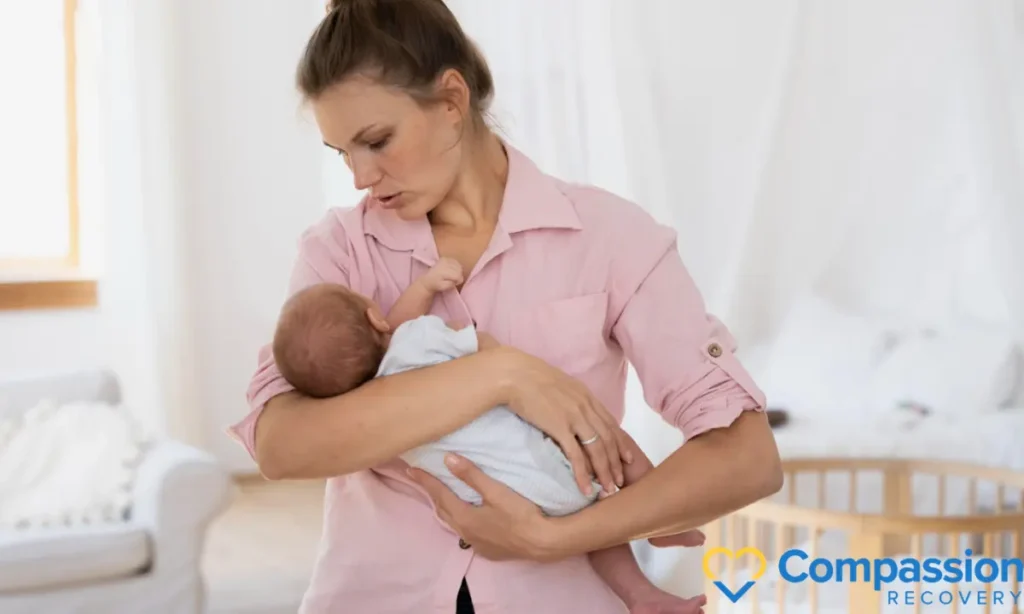
The arrival of a new baby is often depicted as a time of unalloyed joy, soft blankets, and peaceful bonding. However, for many women, the reality of the postpartum period is far more complex. While “baby blues” are a common experience, nearly one in eight women in the United States faces a much deeper, more persistent challenge: postpartum depression (PPD).
At Compassion Recovery Centers, we believe that no mother should have to navigate this journey alone. Postpartum depression is not a character flaw, a sign of weakness, or a reflection of your ability to be a “good mother.” It is a serious, yet treatable, medical condition. By understanding the clinical roots, the symptoms, and the pathways to recovery, you can reclaim your health and build the foundation for a thriving family.
What Is Postpartum Depression (PPD)?
Postpartum depression is a clinical mood disorder that develops after childbirth, characterized by persistent sadness, low energy, and a loss of interest in activities once enjoyed. While the term “postpartum” implies it only occurs after birth, the medical community recognizes a broader window of vulnerability.
The DSM-5 (Diagnostic and Statistical Manual of Mental Disorders, 5th Edition) formally classifies postpartum depression as Major Depressive Disorder with peripartum onset. This clinical authority recognizes that symptoms can actually begin during pregnancy or anytime within the first year after delivery.
Unlike the temporary fluctuations of mood that many new parents feel, PPD is a form of major depression that impairs a mother’s ability to function in her daily life and can significantly interfere with maternal-infant bonding. It is a condition rooted in biological, environmental, and psychological shifts that require professional intervention to resolve.
How Does Postpartum Depression Differ from Baby Blues?
Compassion Recovery Centers is one of the leading treatment centers for virtual IOP in California. Therefore, we believe that it is vital to distinguish between the “baby blues” and clinical postpartum depression, as the treatment paths for each are very different.
The Baby Blues
Up to 80% of new mothers experience the baby blues. This is a transient period of weepiness, anxiety, and irritability that typically begins two to three days after delivery. Because the body is undergoing massive hormonal shifts and the mother is likely facing extreme sleep deprivation, these feelings are considered a “normal” part of the transition.
- Duration: Baby blues typically resolve within 10 to 14 days without clinical treatment.
- Severity: While uncomfortable, baby blues do not usually prevent a mother from caring for herself or her baby.
Postpartum Depression
PPD is far more than just “feeling down.” It is a persistent and debilitating condition.
- Persistence: Clinical diagnostic criteria require symptoms to persist for at least 2 weeks. If feelings of sadness or anxiety last beyond that 14-day mark, the likelihood of a diagnosable mood disorder increases significantly.
- Functional Impairment: PPD often makes it difficult to complete daily tasks, such as showering, eating, or responding to the baby’s cues.
- Safety Concerns: In severe cases, PPD may trigger suicidal thoughts or intrusive thoughts about harming the infant, symptoms that require immediate medical attention.
Also Read: How Does Therapy Help in the Treatment of Depression?
Prevalence and Statistics
Postpartum depression is a global public health concern. According to the World Health Organization (WHO), between 10% and 20% of women worldwide experience PPD. However, these numbers can fluctuate based on geography and access to care.
- In the United States: The CDC estimates that 1 in 8 mothers experience symptoms of PPD.
- In Developing Regions: In low- and middle-income countries, prevalence rates may reach 25% or higher. This is often due to the compounding effects of limited access to mental health care, nutritional deficiencies, and increased social stressors.
At Compassion Recovery Centers, we use these statistics not to overwhelm you, but to remind you that you are part of a large community. This is a shared human experience, and there is no shame in being among the millions who need support.
What Are the Main Symptoms of Postpartum Depression?
PPD manifests through a wide array of emotional, cognitive, and physical symptoms. Because these symptoms often overlap with the general exhaustion of new parenthood, it is important to look for the intensity and duration of the feelings.
| Symptom Category | Examples and Descriptions |
| Emotional | Persistent sadness, frequent crying, feelings of hopelessness, or feeling “numb” and unable to feel joy toward the baby. |
| Cognitive | Intense guilt, feelings of worthlessness or being a “bad mother,” difficulty concentrating, and indecisiveness. |
| Behavioral | Social withdrawal (avoiding friends and family), loss of interest in hobbies, and difficulty bonding with the infant. |
| Physical | Severe sleep disturbances (unable to sleep even when the baby sleeps), appetite changes (overeating or loss of appetite), and unexplained aches or pains. |
What Causes Postpartum Depression?
Postpartum depression does not have a single cause. Instead, it is the result of a “perfect storm” of biological and environmental factors.
1. The Hormonal Shift
Immediately after childbirth, the levels of estrogen and progesterone in a woman’s body drop more rapidly than at any other time in her life. These hormones are linked to the neurochemical regulation of mood. This sudden “crash” can trigger chemical changes in the brain that lead to depression.
2. The Stress Response and Sleep
Sleep deprivation is an inherent part of early parenthood, but for some, it becomes a biological trigger. Studies show that chronic sleep deprivation elevates cortisol levels (the stress hormone), which can worsen depressive symptoms and create a cycle of anxiety and exhaustion.
3. Psychological and Genetic History
History plays a major role in risk. According to research, women with a prior history of depression or anxiety, whether during pregnancy or earlier in life have a 30% to 50% higher risk of developing PPD.
Genetics also play a role, as a family history of mood disorders can increase vulnerability.
4. Social Factors
One of the strongest social predictors of PPD is a lack of support. Mothers who feel isolated, lack a supportive partner, or face financial instability are at a significantly higher risk. At Compassion Recovery Centers, we emphasize the “village” approach because social connection is a biological necessity for a recovering mother.
Why Does Postpartum Depression Require Treatment?
Choosing to seek treatment is not just about the mother’s comfort; it is a vital medical necessity for the entire family. Left untreated, PPD can have long-lasting consequences.
Maternal Health and Safety
The Centers for Disease Control and Prevention (CDC) reports that suicide is among the leading causes of maternal death in the first year after childbirth. It highlights PPD must be treated with the same urgency as a physical postpartum complication like a hemorrhage or infection.
Infant Development and Bonding
A mother’s mental health is the primary environment for an infant’s developing brain. Untreated PPD is associated with:
- Poor Maternal-Infant Bonding: Difficulty responding to the baby’s emotional needs.
- Developmental Delays: Research links PPD to delays in an infant’s language and cognitive development.
- Behavioral Issues: Children of mothers with untreated PPD are at a higher risk for emotional and behavioral problems later in life.
The Path to Recovery
The good news is that PPD is highly treatable. Clinical data shows that early treatment significantly reduces symptom severity within 8 to 12 weeks for the majority of patients. Recovery allows a mother to fully engage with her child and enjoy the milestones of early motherhood.
Accessing this path to recovery is a vital step toward reclaiming your well-being and protecting your family’s future. If you are currently seeking professional support and reside anywhere in the state, you can take advantage of specialized postpartum depression treatment in California. At Compassion Recovery Centers, we provide comprehensive, localized care throughout California to ensure that every mother has the clinical resources and compassionate environment she needs to heal and thrive.
What Treatments Are Available for Postpartum Depression?
At Compassion Recovery Centers, we utilize evidence-based treatments that address both the mind and the body.
1. Evidence-Based Psychotherapy
- Cognitive Behavioral Therapy (CBT): CBT helps mothers identify and change negative thought patterns and behaviors. It is highly effective in treating the “guilt” and “inadequacy” symptoms of PPD.
- Interpersonal Therapy (IPT): IPT focuses on improving relationship stress and helping the mother adjust to her new role.
- Success Rate: Clinical studies show that CBT and IPT lead to 60–70% symptom improvement rates.
2. Medication Management
- SSRIs (Selective Serotonin Reuptake Inhibitors): Medications like sertraline or fluoxetine are commonly prescribed and considered safe and effective for moderate to severe PPD, even for many breastfeeding mothers.
- Brexanolone: In a landmark move, the U.S. Food and Drug Administration (FDA) in 2019 has approved brexanolone as the first medication specifically indicated for PPD. It targets GABA receptors in the brain to provide rapid relief, validating PPD as a serious, distinct medical condition.
3. Holistic and Support Systems
Recovery is bolstered by support groups, nutritional counseling, and partner education. When a partner understands that PPD is a medical issue, they can provide the structural support the mother needs to heal.
When Should Someone Seek Medical Help?
Knowing when to ask for help is the first step toward healing. Medical professionals, including obstetricians and primary care physicians, are trained to screen for PPD using tools such as the Edinburgh Postnatal Depression Scale (EPDS).
You should seek an immediate medical evaluation if:
- Symptoms of sadness, anxiety, or “emptiness” last more than two weeks.
- You find it difficult to care for yourself or your baby.
- You have thoughts of self-harm or thoughts of harming your baby.
- You feel a sense of severe withdrawal from your loved ones.
If you are experiencing a crisis, please reach out to a local emergency room, a crisis hotline, or your healthcare provider immediately. There is no need to wait for things to “get worse” before you reach out.
Final Thoughts
Motherhood is a profound transformation, and it is okay if that transformation feels heavy right now. Postpartum depression is a medical detour, not the end of your story. At Compassion Recovery Centers, we provide a safe, non-judgmental environment where you can receive the clinical care and emotional support necessary to find your way back to yourself.
You are not alone, you are not to blame, and with the right help, you will get better.
If you or a loved one are struggling with symptoms of postpartum depression, reach out to us today. Let’s take the first step toward healing together.