

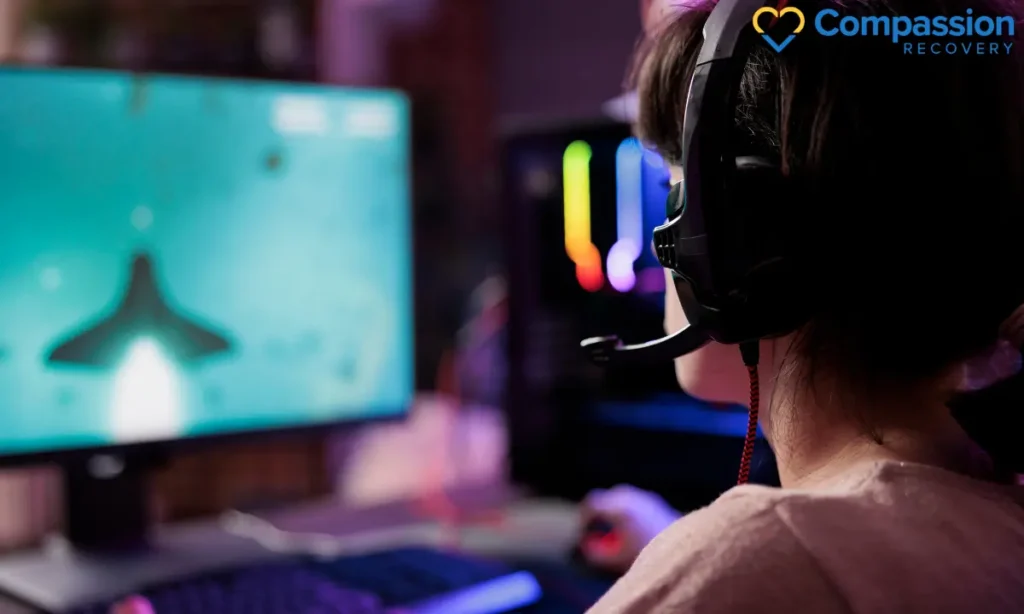
Video games have evolved from a niche hobby into a global cultural phenomenon. From mobile puzzles to expansive multiplayer universes, there are now over 3 billion gamers worldwide. However, as gaming becomes more integrated into our daily lives, a pressing question has emerged among parents, educators, and mental health professionals: Can video games cause depression?
The debate is often polarized. On one side, critics argue that excessive screen time leads to isolation and mood disorders. On the other hand, proponents highlight the social and cognitive benefits of interactive media. To understand the truth, we must move beyond the general logic and look at the nuances of “correlation versus causation.” While only 2–3% of gamers develop a clinical gaming disorder, the relationship between digital play and emotional well-being is complex. If you or a loved one are concerned about changes in mood, professional support through our depression therapy can help. According to the World Health Organization, gaming disorder is recognized as a condition affecting a small percentage of gamers worldwide.
In this article, we will explore how gaming affects the brain, the difference between a hobby and an addiction, and whether video games are a cause of depression or a symptom of underlying struggles.
What Is Depression and How Does It Develop?
To understand if gaming impacts depression, we must first define what depression actually is. Clinical depression, or Major Depressive Disorder (MDD), is a serious mood disorder that affects how a person feels, thinks, and handles daily activities. Raising awareness through initiatives like mental health awareness colors plays an important role in education and support.

Common Symptoms of Depression
According to the American Psychiatric Association’s DSM-5, depression is characterized by a persistent feeling of sadness or a loss of interest in activities once enjoyed. Key symptoms include:
- Persistent sadness or “empty” mood.
- Anhedonia: The loss of interest or pleasure in hobbies (including gaming itself).
- Sleep disturbances: Insomnia or oversleeping.
- Fatigue: A constant lack of energy.
- Cognitive issues: Difficulty concentrating or making decisions.
- Feelings of worthlessness or hopelessness.
The Root Causes
Based on our experience as a leading provider of depression treatment for the residents of Orange County ,we can tell you that it rarely has a single cause. Depression usually develops from a combination of:
- Biological Factors: Imbalances in brain chemicals like serotonin and dopamine.
- Genetics: A family history of mood disorders.
- Trauma/Stress: Major life changes, loss, or chronic stress.
- Environmental Factors: Social isolation and sleep deprivation are the two areas where excessive gaming often overlaps.
What Are Video Games and How Do They Affect the Brain?
To understand the link between gaming and depression, we must first define what a video game actually is. Unlike movies or books, which are passive forms of media, video games are interactive electronic experiences where a player’s input directly affects the outcome of the story or challenge.
Whether it is a simple puzzle on a phone or a complex multiplayer universe, a video game is essentially a feedback loop. You take an action, the game gives you a result, and your brain processes that result as a success or failure. It is this unique, constant cycle of action and reward that makes video games affect the brain differently than any other form of entertainment.
The Interactivity-Brain Connection
Because video games require active participation, they often trigger the brain’s survival and reward systems. Here is how that process works:
- The Dopamine Reward System: When you achieve a goal in a game, such as leveling up or winning a match, the brain releases a burst of dopamine. In a video game, these rewards happen much faster and more frequently than in real life. This creates a chemical high that can lead to habit formation.
- Neuroplasticity and Habituation: The brain is highly adaptable. When it becomes used to the intense, fast-paced rewards of a video game, the real world can begin to feel slow and uninteresting. This is called desensitization, and it is a major factor in why excessive gamers often report feeling numb or depressed when they are not playing.
- The Flow State and Escapism: Video games are designed to put players in a flow state, which is a level of intense focus where time seems to disappear. While this is great for stress relief, staying in this state for too long can lead to cognitive fatigue. When a player finally stops, they often experience a crash in mood, which can mimic or worsen symptoms of depression.
Cognitive and Emotional Impacts
By defining video games as an active feedback loop, we can see why they have such a strong impact on our mental biology:
- Attention and Focus: Games improve selective attention, which helps the brain filter out distractions.
- Reaction Time: The brain’s motor cortex and visual processing areas become faster and more efficient.
- Emotional Regulation: For many, the sense of agency, or the feeling of being in control, in a game provides a temporary shield against the helplessness often felt during a depressive episode.
By understanding that video games are active neurological stimulants, it becomes clear why they have the power to both help our mood and, when used excessively, potentially disrupt our brain’s natural emotional balance.
Can Video Games Cause Depression or Only Correlation?
This is the most important question for anyone worried about their mental health or the health of a loved one. To find the answer, we have to look at whether gaming is the actual cause of the problem or just a sign that something else is wrong. Most medical experts agree on a vital point: Video games do not directly cause depression, but excessive gaming is closely linked to a higher risk of mental health issues. Improving understanding through initiatives like the mental health awareness ribbon helps reduce stigma and encourages people to seek help earlier.
The Difference Between Correlation and Causation
To understand this, we need to distinguish between two things: causation and correlation. Causation means that one thing directly creates another. For example, if you burn your hand on a stove, the stove caused the burn. Correlation means that two things happen at the same time, but one did not necessarily create the other.
In the case of mental health, researchers often see a correlation between heavy gaming and depression. This means that people who are depressed often spend a lot of time playing games. However, it does not mean the game itself created the depression. Instead, other factors are usually at play.
Why Depressed People Turn to Gaming
The reason for this link is often something called reverse causality. This occurs when a person who is already feeling depressed, anxious, or lonely turns to video games as a way to feel better.
When life feels difficult, video games provide a sense of achievement and a social community that might be missing in the real world. This is known as escapism. In this scenario, gaming is a symptom of depression rather than the cause. The game is being used as a tool to cope with emotional pain, even if it is not a permanent solution. For healthier coping strategies, explore these ways to cope when life feels meaningless.
How Excessive Gaming Can Make Depression Worse
Even though games do not cause depression directly, they can create a lifestyle that makes depression much worse. This is known as displacement. When you spend too many hours gaming, you are displacing the healthy habits your brain needs to stay happy. These include:
- Physical Activity: Exercise releases natural chemicals in the brain that fight depression.
- Deep Sleep: Your brain needs rest to regulate your mood. Late night gaming often ruins sleep quality.
- Real World Interaction: Human beings need face to face connection to feel emotionally stable.
What the Research Says
Research published in JAMA Pediatrics supports this idea. Their studies found that high levels of screen time are linked to more depressive symptoms in teenagers. However, the data showed that the depression was mostly tied to the loss of sleep and the lack of physical activity rather than the specific content of the games.
The takeaway for the user is simple: Playing video games is usually a safe hobby. However, when gaming starts to replace your sleep, your exercise, and your real life relationships, it can lead to a cycle that mimics or triggers a depressive state..
Can Video Games Have Positive Effects on Mental Health?
To have a truly balanced view, we must acknowledge that for millions of people, video games are actually a tool for wellness and emotional recovery. It is important to understand that the relationship between gaming and mental health is not entirely negative. In many cases, gaming can be a protective factor that helps prevent the very feelings of isolation and despair that lead to depression.
How Gaming Supports Mental Wellness
For many players, the positive effects of gaming come from the way games engage the mind and provide a sense of purpose. Here are the primary ways video games can benefit your mental health:
- Stress Relief and Decompression: Games provide a healthy outlet for relaxation after a difficult or stressful day. By focusing on the challenges within a game, you give your brain a much-needed break from real-world worries. This mental shift can help lower stress levels and provide a sense of peace.
- Social Connection and Community: For individuals who struggle with social anxiety or have physical disabilities, multiplayer games are a vital source of community. Games like Final Fantasy XIV or Among Us allow people to build friendships and feel a sense of belonging. This social interaction is a powerful weapon against the loneliness that often fuels depression.
- Cognitive Training and Self-Esteem: Strategy and puzzle games improve problem-solving skills and memory. When a player overcomes a difficult level or masters a new skill, it creates a sense of achievement. This boost in self-efficacy can improve a person’s overall confidence and mood in their daily life.
- Emotional Regulation and Therapy: Some games are designed specifically to help players manage their emotions. There is a growing field known as Serious Games where interactive media is used in clinical therapy. These tools are being used by professionals to help patients work through trauma and manage symptoms of PTSD and depression in a safe, controlled environment.
By looking at these benefits, it is clear that video games can be a positive force for mental health. When played in a balanced way, they offer a unique combination of social support, cognitive challenge, and emotional relief that few other forms of media can provide.
Who Is Most at Risk?
Not everyone who plays games for eight hours on a Saturday is at risk for depression. However, certain groups are more vulnerable to the negative impacts of excessive gaming:
- Teenagers: Their brains are still developing, particularly the prefrontal cortex, which handles impulse control.
- Individuals with ADHD: The constant feedback of games is highly stimulating for ADHD brains, making it harder to “switch off.” For individuals struggling with focus and impulsivity, exploring professional support such as ADHD treatment can help build healthier habits and improve daily functioning.
- Socially Isolated Individuals: Those who lack a strong offline support system may become overly reliant on virtual worlds.
- People with Pre-existing Anxiety: Using games to avoid anxiety-inducing tasks in the real world can lead to a “procrastination-depression” cycle.
How To Play Video Games Without Hurting Mental Health
Important to mention here, the goal is not to quit gaming entirely, but to build healthy gaming habits. If you or a loved one are concerned about the impact of gaming on your mood, consider these practical tips:
- Set Time Limits: Aim for 1–2 hours on weekdays and slightly more on weekends. Use a timer to prevent “time blindness.”
- The “Sunlight First” Rule: Don’t start gaming until you have spent time outside or engaged in physical activity.
- Protect Your Sleep: Stop all screens at least one hour before bed. Blue light interferes with melatonin production.
- Prioritize Social Balance: For every five hours spent gaming, try to spend at least one hour socializing in person or over a video call.
- Audit Your Games: If a specific game (like a highly competitive “toxic” environment) makes you feel angry or drained, stop playing it. Choose games that leave you feeling refreshed.
If gaming is starting to affect your mood, focus, or daily routine, it may be a sign that you need extra support. You don’t have to figure it out on your own, our online therapy program offers flexible, structured care that fits into your life, helping you build healthier habits while still enjoying the things you love.
Finding the Balance
So, can video games cause depression? The answer is: Not directly.
Video games are a tool. In moderation, they provide joy, community, and cognitive stimulation. However, when gaming is used to escape life’s problems rather than face them, or when it begins to displace sleep, exercise, and real-world relationships, it can contribute significantly to a depressive state.
The key is balance. If you find that you no longer enjoy gaming but feel a “need” to play, or if your mood dips significantly when you aren’t at your console, it may be time to speak with a mental health professional.By maintaining healthy boundaries and staying mindful of why we play, we can enjoy the incredible worlds that video games offer without sacrificing our mental health.